Truly understanding your customers and optimizing their experiences has never been more critical. Whether you operate an e-commerce store on Shopify, run a SaaS platform, or any type of online business, the ability to make smart data-driven decisions is the key to unlocking higher conversion rates and boosting your bottom line. However, not all data is created equal; in fact, focusing on the wrong data and metrics can send your business speeding in the wrong direction. That’s why it’s absolutely necessary to identify the right metrics that truly matter to your business when looking at your conversion rate optimization audit, hypothesizing, and crafting your optimization strategy. By mastering this, you can ensure every decision your business makes is rooted in meaningful insights that drive growth. Let’s dive deeper into data metrics to discover how to harness the power of the right data for successful conversion rate optimization.
What is a CRO Audit and Why do Metrics Used Matter
A CRO audit is a thorough evaluation of your website’s performance in converting visitors into valuable customers. Audits expose how users behave and respond to content, designs, call to actions (CTA) and so much more. Take a closer look at what CRO audits are and how they can help your business; check out our Why CRO Audits Are An Essential Tool For All Business/blog post.
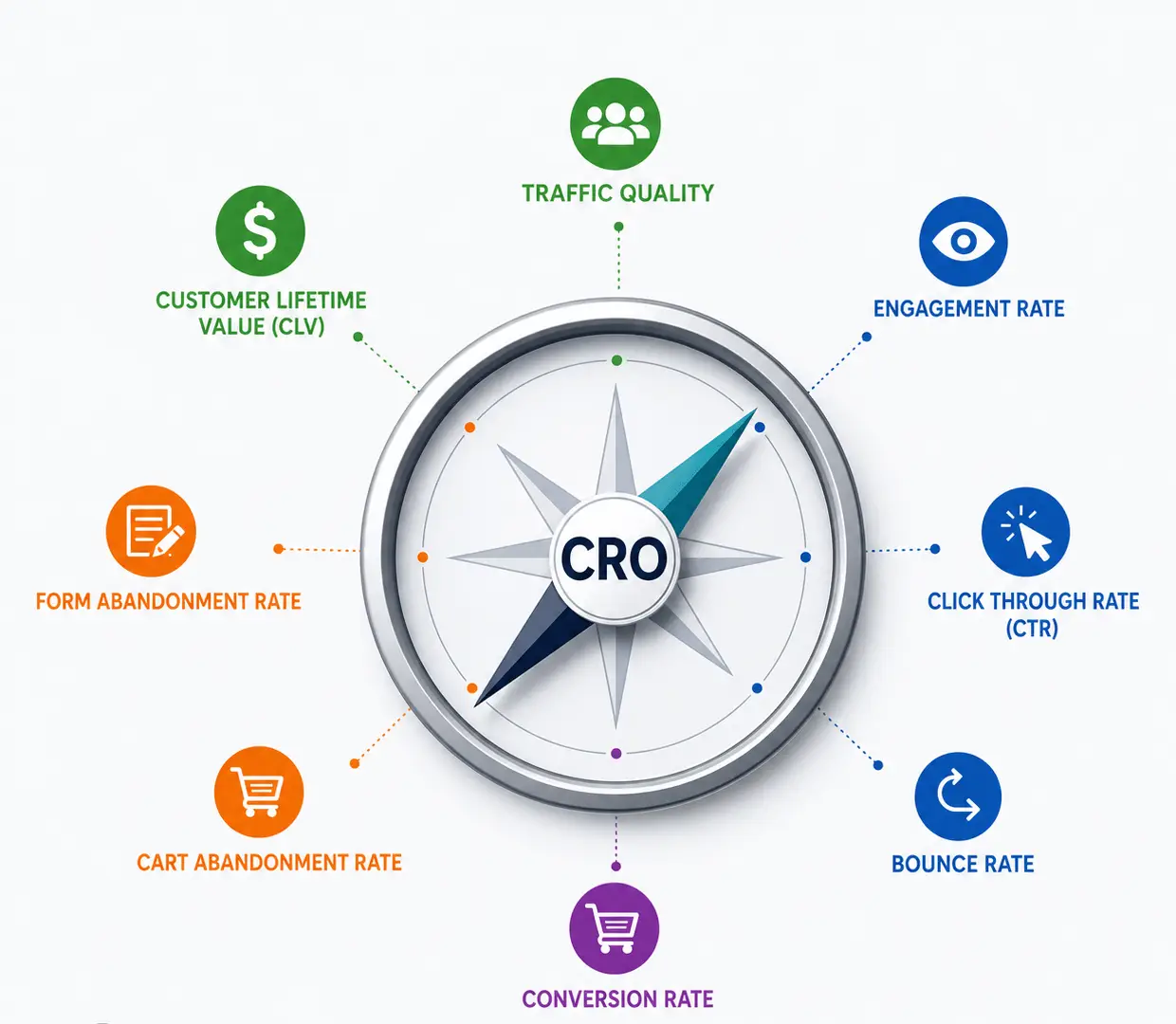
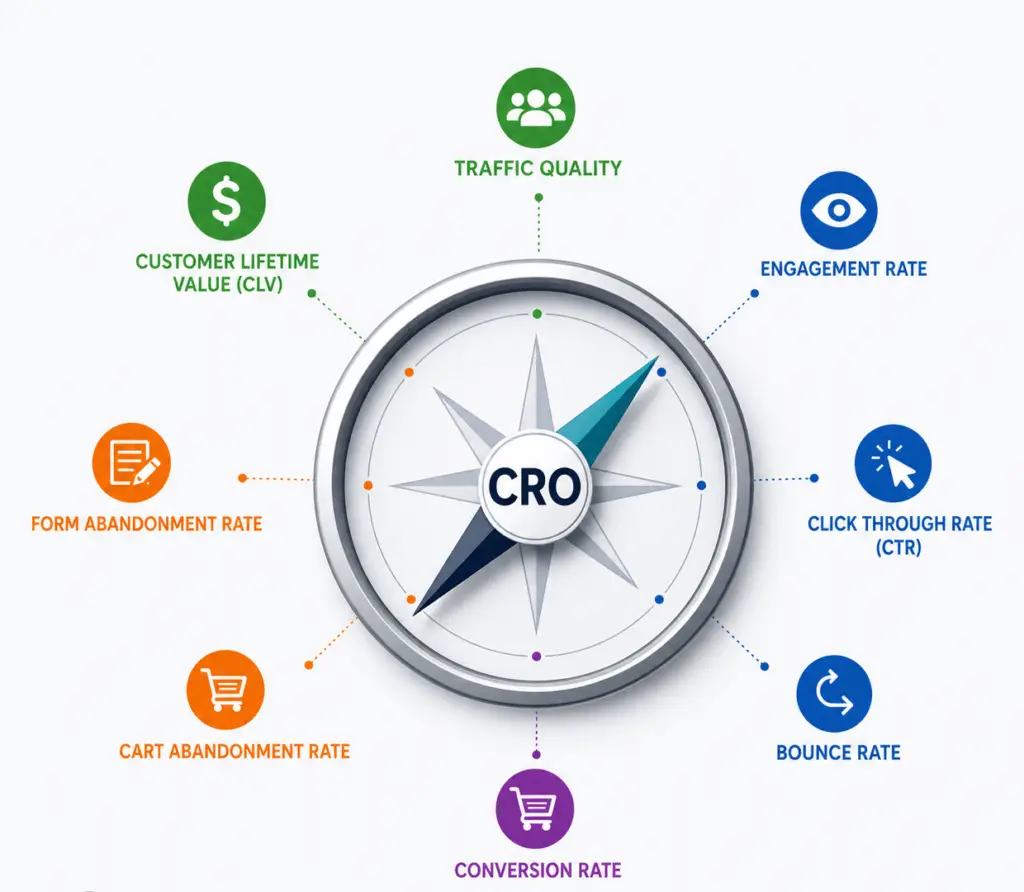
Metrics act as your compass during a CRO audit. Without them, you would be navigating blindly, guessing what works and what doesn’t work. With the right CRO metrics, you gain clarity on what truly drives conversions, where bottlenecks exist, and how users behave on your website.
10 Core CRO Metrics Every Business Should Track
The world of CRO metrics can seem vast and overwhelming. However, focusing on essential, actionable data points helps keep your audit precise and effective. Here’s a breakdown of the key metrics, why they matter, and how they contribute to your conversion goals.
1. Conversion Rate (CvR)
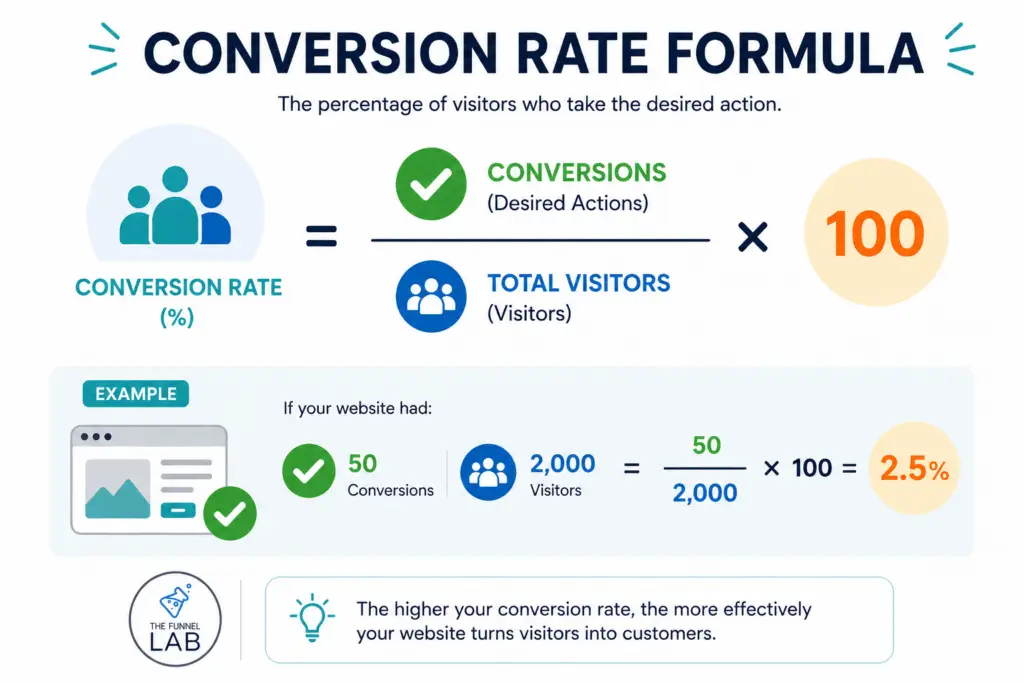
The most fundamental metric, conversion rate, measures the percentage of visitors who complete a desired action—whether that’s making a purchase, signing up for a newsletter, or requesting a demo. It’s the ultimate bottom-line indicator of CRO success.
Why it matters:
Conversion rate tells you directly how well your site or campaign turns interest into action. Low conversion rates highlight opportunities for improvement in user experience, messaging, or targeting.
How to consider it:
Look beyond the overall rate and segment it by traffic source, device, location, or landing page. This granularity reveals which channels or pages perform best, guiding focused optimization efforts.
2. Bounce Rate
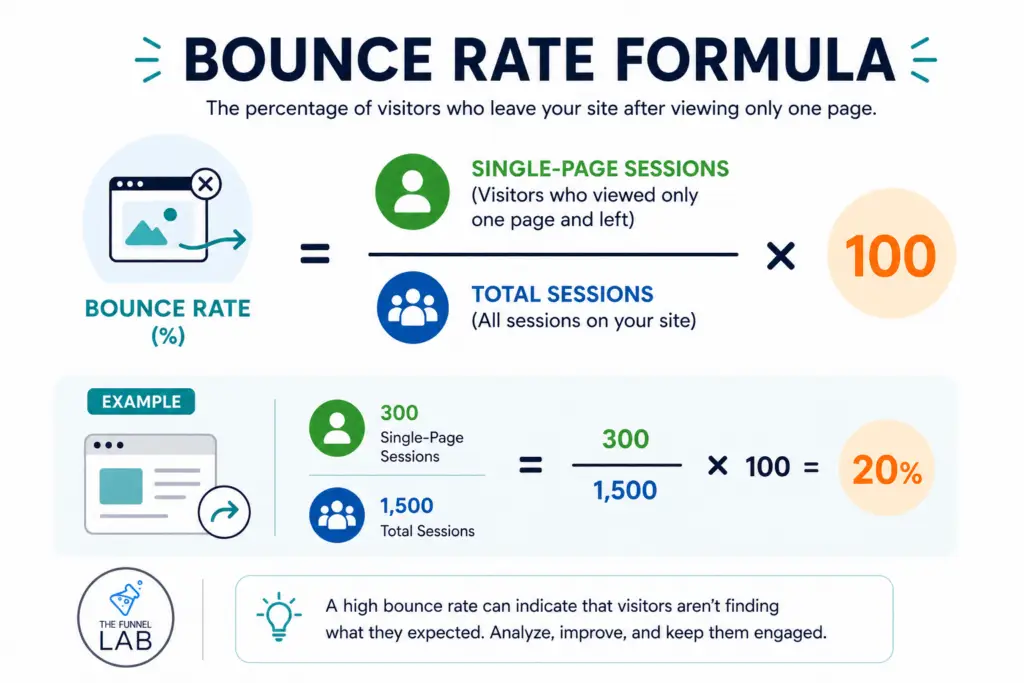
Bounce rate tracks the percentage of visitors who leave your site after viewing only one page. A high bounce rate often signals that your landing page isn’t engaging visitors or meeting their expectations.
Why it matters:
If visitors leave immediately, it’s a missed opportunity. Bounce rate helps identify pages that need better content, clearer calls to action, faster loading times, or improved relevance.
How to consider it:
Analyze bounce rates alongside conversion rates and traffic sources. For example, high bounce rates from paid ads may indicate mismatched messaging or targeting issues.
3. Average Session Duration and Page Per Session
These two metrics reflect user engagement. Average session duration measures how long visitors stay on your site, while pages per session count how many pages they explore.
Why they matter:
Longer sessions and more pages suggest users find your content valuable and are more likely to convert. Short, shallow visits typically forecast lower conversions.
How to consider them:
Use these metrics to assess content quality, site navigation, and overall user experience. If visitors quickly leave or view only a page or two, it’s a cue to make your site easier to explore and more engaging.
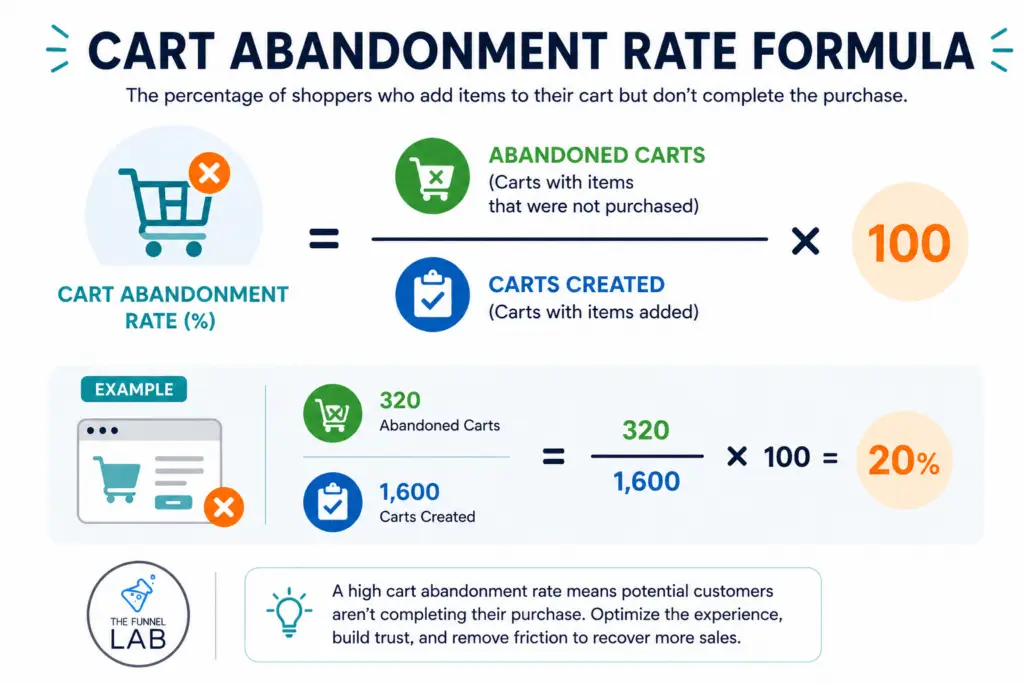
4. Cart Abandoment Rate
This metric tracks the percentage of shoppers who add products to their cart but leave without completing the purchase.
Why it matters:
Cart abandonment reveals friction points in your checkout process—whether it’s unexpected costs, complicated forms, or lack of trust signals.
How to consider it:
Test checkout flow improvements, add cart reminders or exit-intent offers, and analyze abandonment by device or source to tailor solutions effectively.
5. Click-Through Rate (CTR)
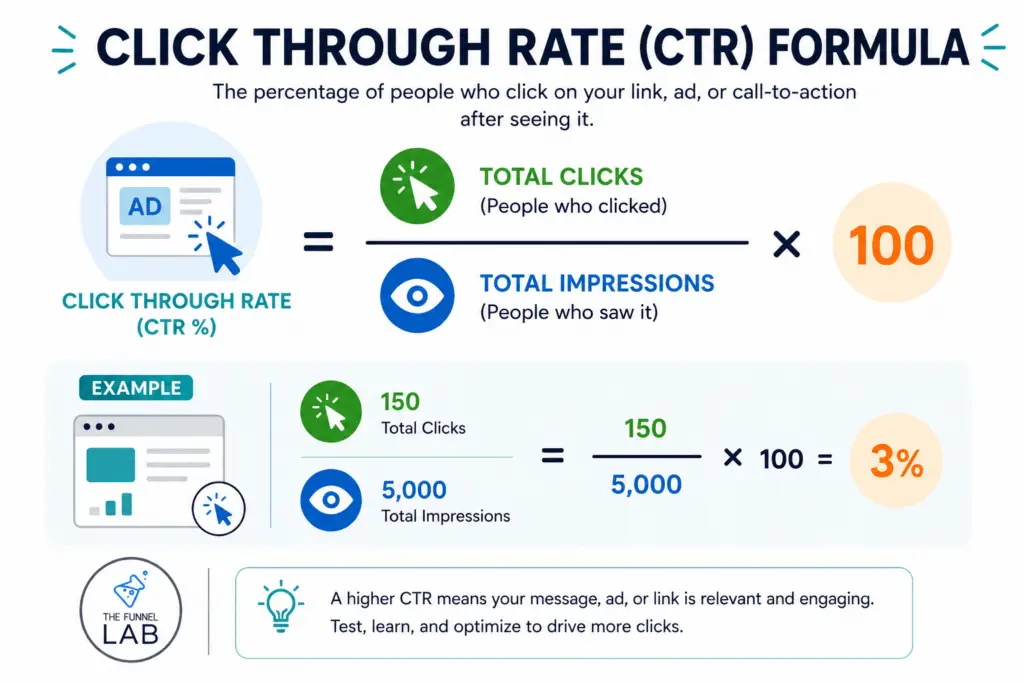
CTR measures the percentage of users who click on a specific link or call-to-action compared to the total users who saw it.
Why it matters:
CTR indicates how compelling and relevant your messaging is, whether in emails, ads, or on-site buttons. Low CTRs mean your value proposition or call-to-action needs refinement.
How to consider it:
Test different copy, design, and placement to boost CTR, and segment by audience demographics to tailor your approach.
6. Customer Lifetime Value (CLV)
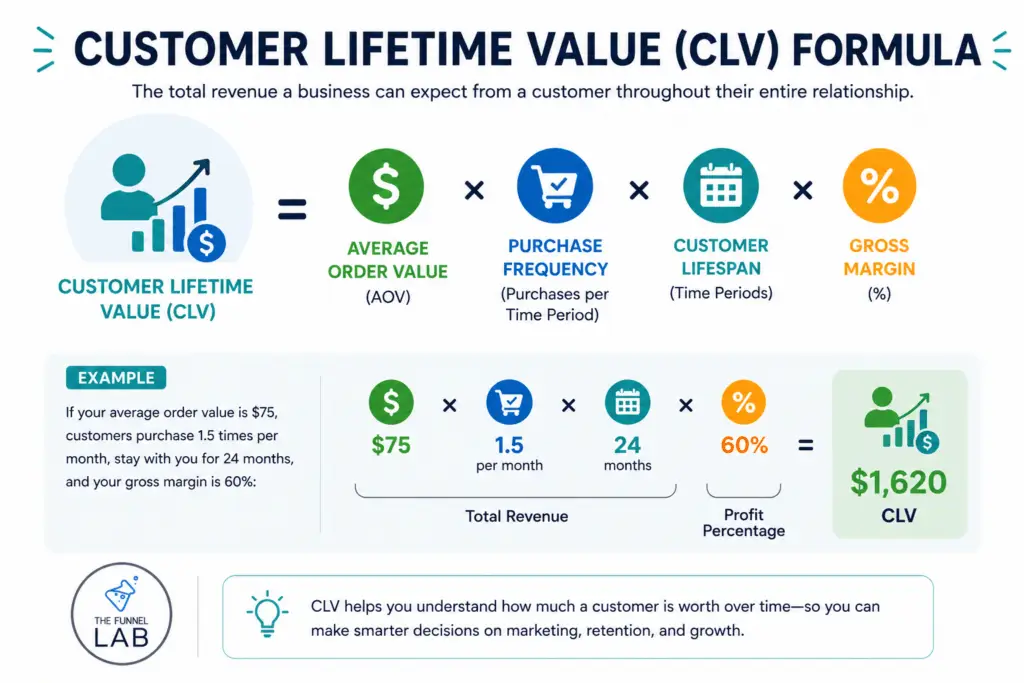
CLV estimates the total revenue a customer will generate over their relationship with your business.
Why it matters:
Understanding CLV helps prioritize CRO efforts toward retaining high-value customers and optimizing for long-term profitability, not just one-time conversions.
How to consider it:
Combine CLV with acquisition costs to ensure your marketing and CRO strategies attract and keep the right customers profitably.
7. Exit Rate
Exit rate shows the percentage of users who leave your site from a specific page.
Why it matters:
High exit rates on key pages might indicate issues with content, UX, or confusing navigation that deter users from progressing further.
How to consider it:
Use exit rate alongside funnel analysis to identify and fix drop-off points in the conversion journey.
8. Form Abandonment Rate
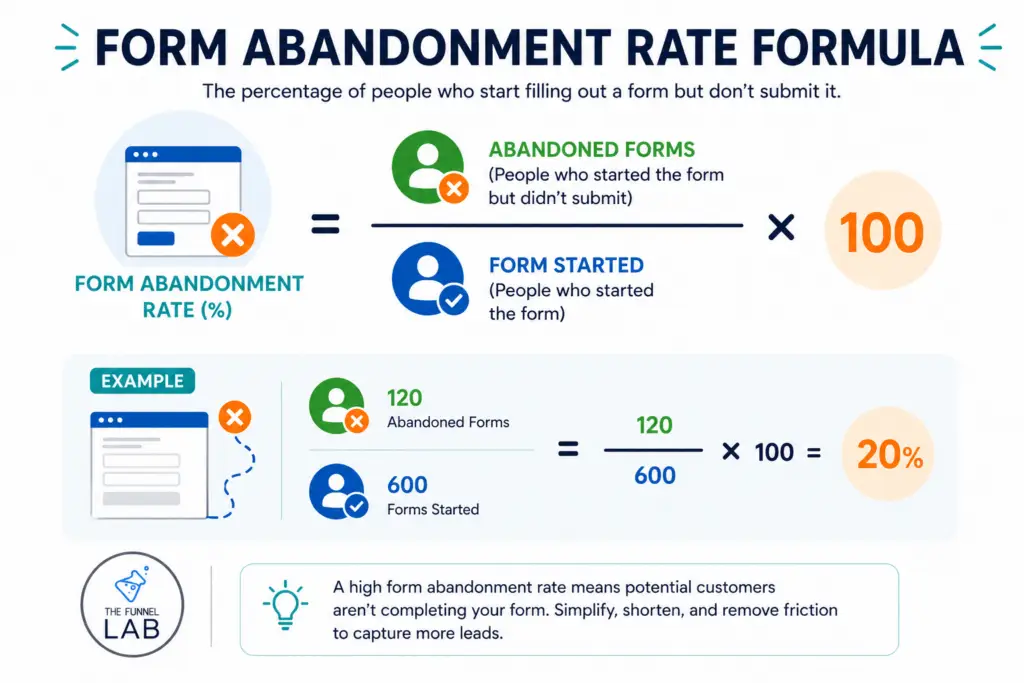
For sites relying on lead generation through forms, this metric measures how many users start but don’t complete the form.
Why it matters:
High abandonment suggests the form is too long, unclear, or intrusive, costing you valuable leads.
How to consider it:
Simplify forms, add progress indicators, and test different field requirements to optimize completion rates.
9. Average Order Value (AOV)
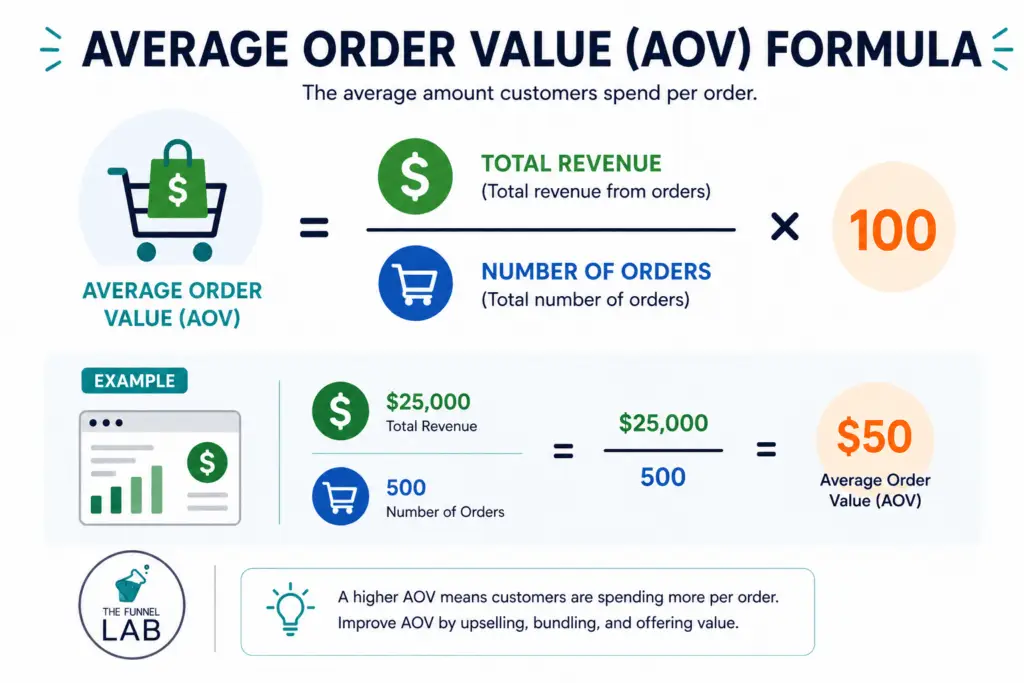
AOV (Average Order Value) is the average amount a customer spends per purchase. Increasing AOV boosts revenue without needing more customers, using tactics like upselling, product bundling, or free shipping thresholds. It is calculated by dividing total revenue by the number of orders placed.
Why it matters:
A higher AOV means more revenue from each customer transaction, improving overall profitability and marketing efficiency. It helps maximize the value of existing traffic and reduces the cost per sale.
How to consider it:
Analyze AOV by customer segments, product categories, and sales channels to identify opportunities for targeted upselling or bundling. Test different offers and incentives to encourage customers to spend more per order.
10. Customer Acquistion Cost (CAC)
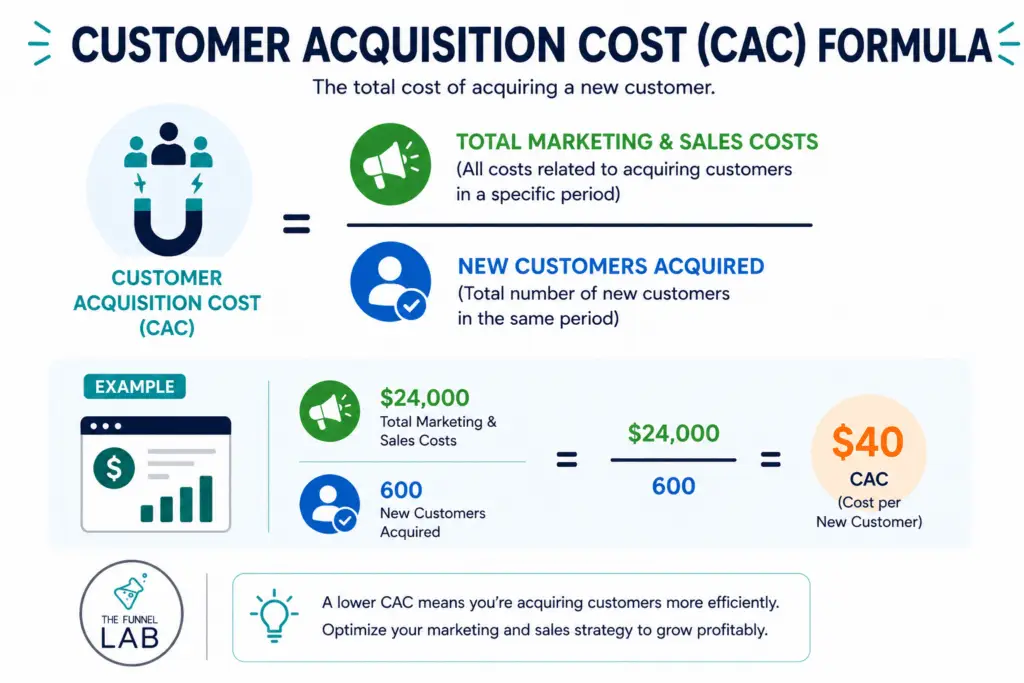
Customer Acquisition Cost (CAC) is the average expense of gaining a new customer, including all marketing and sales costs. A low CAC indicates efficient customer conversion, while a high CAC suggests the need to improve marketing strategies for better ROI. It is calculated by dividing the total marketing and sales expenses by the number of new customers acquired.
Why it matters:
CAC helps businesses understand the cost-effectiveness of their marketing and sales efforts. Keeping CAC low ensures sustainable growth and better profitability by acquiring customers without overspending.
How to consider it:
Evaluate CAC alongside customer lifetime value (CLV) to ensure acquisition costs are justified by long-term revenue. Segment CAC by channels and campaigns to identify the most efficient sources of new customers and optimize budget allocation accordingly.
How to Use These Metrics
When conducting a CRO audit, these metrics serve as key data points that illuminate the health and potential of your conversion funnel. Here’s a structured approach to leveraging them:
1.Establish Benchmarks:
Start by gathering current data on all relevant metrics to understand your baseline performance.
2. Segment Your Data:
Break down metrics by traffic source, device, demographics, and user behavior to uncover hidden patterns.
3. Identify Bottlenecks and Drop-Off Points:
Use bounce rates, exit rates, and abandonment metrics to pinpoint where users lose interest or face obstacles.
4. Analyze User Behavior:
Complement quantitative metrics with qualitative data like session recordings, heatmaps, or user feedback to grasp the “why” behind the numbers.
5. Prioritize Testing Opportunities:
Focus on pages or steps with the highest impact potential and lowest performance to maximize returns on optimization efforts.
6. Track Improvements Over Time:
Continuously monitor these metrics after implementing changes to validate what works and iterate accordingly.
Why Reviewing These Metrics Are Beneficial for Businesses
Understanding and acting on CRO metrics is far more than just crunching numbers—it’s about empowering your business to make smarter decisions that fuel meaningful growth. When you embrace these metrics, you unlock insights that transform how you connect with your customers and optimize your digital presence. Here’s why paying close attention to CRO metrics is a game-changer for any business:
Increased Revenue Without More Traffic:
Imagine you run an online clothing store that gets steady traffic but struggles with sales. By optimizing your conversion rate—perhaps by simplifying the checkout process or highlighting best-sellers—you can boost revenue significantly without spending extra on ads. This means you’re extracting more value from the visitors you already have, reducing the pressure and cost of constantly acquiring new traffic.
Example, a mid-sized retailer increased their conversion rate by 20% simply by adding product videos and clearer sizing guides, resulting in a substantial revenue uplift without any additional marketing spend.
Improved User Experience:
Metrics like session duration and bounce rate offer a window into how visitors experience your site. If visitors leave quickly or don’t explore beyond the landing page, it’s a signal that something isn’t quite right—maybe the navigation is confusing, or the content doesn’t resonate. By addressing these issues, you make browsing and buying smoother and more enjoyable.
Example, Consider a SaaS company whose bounce rate dropped by 30% after revamping their homepage with clearer value propositions and easier access to product demos, making it simpler for prospects to engage and convert.
Better Marketing ROI:
Your marketing budget is precious, and CRO metrics help ensure every dollar is well spent. Click-through rates (CTR) show how compelling your ads and calls to action are, while customer lifetime value (CLV) reveals which customers bring the most long-term value.
Example, a subscription box service used these metrics to identify their most profitable customer segment and tailored campaigns to attract similar profiles, resulting in higher retention and more efficient use of their marketing dollars.
Data-Driven Decisions:
Gone are the days of relying on gut feelings or assumptions. With CRO metrics, you have concrete data guiding your steps. This reduces costly mistakes and wasted efforts.
Example, an e-commerce site used heatmaps and conversion data to discover that a “Buy Now” button was overlooked because it was placed too low on the page. Moving it higher led to a measurable increase in conversions. Making changes backed by data means you continually refine your site in ways that truly resonate with your audience.
Competitive Advantage:
In today’s fast-moving markets, staying still means falling behind. Businesses that regularly audit and optimize their conversion performance based on solid metrics can respond quickly to changing customer behaviors and market trends. Example, a travel booking platform that monitored exit rates and booking abandonment closely; by swiftly addressing friction points in the booking process, they stayed ahead of competitors and captured more bookings during peak seasons.
In summary, CRO metrics are not just numbers—they are powerful tools that help you understand your customers, improve your website, and grow your business more efficiently. By focusing on these insights, you position your company to thrive, adapt, and outperform competitors in an increasingly digital world. Whether you’re a small startup or a large enterprise, embracing CRO metrics can be the key to unlocking your full revenue potential and creating lasting customer relationships.
Final Thoughts: Make Metrics Your CRO Compass
Conversion Rate Optimization isn’t just about tweaking buttons or redesigning pages—it’s about understanding your audience deeply and delivering value at every step of their journey. Metrics give you the roadmap to do exactly that. By regularly tracking and analyzing key CRO indicators like conversion rate, bounce rate, CTR, and others, you empower your business to grow smarter, faster, and more sustainably.
As you plan your next CRO audit, remember: it’s not about collecting data for data’s sake. It’s about finding the right signals that point to real opportunities. Use these metrics to uncover insights, prioritize action, and test boldly. The payoff? A website that converts better, customers who are happier, and a business that thrives.
Keep exploring, optimizing, and growing—your next breakthrough is just a metric away.
In today’s competitive digital landscape, simply attracting visitors to your website is not enough. Now, the true measure of success is converting those visitors into customers or subscribers and leads. This is where businesses should turn and begin to lean into conversion rate optimization (CRO) and more specifically, to a CRO Audit. CRO audits have become a crucial step for any business aiming to maximize its online effectiveness and build from customer understanding.
What is a Conversion Rate Optimization (CRO) Audit?
A conversion rate optimization audit is a comprehensive evaluation of a business’s current digital standing with the goal of identifying obstacles, unique behaviors, segments, bottlenecks, and pain points within the funnel that are preventing visitors from completing a desired action like making a purchase, filling out a form, or signing up for a newsletter. Audits analyze various elements, including site design, user experience (UX), content quality, and technical performance. By uncovering these issues, businesses gain actionable insights to optimize their site and increase the percentage of visitors who convert into customers or leads.
For example, an online apparel retailer selling clothes might discover through a CRO audit that slow-loading product pages or a complicated checkout process are causing customers to abandon their carts. Addressing these issues can significantly boost sales without needing to increase traffic.
Understading the stages of a CRO Audit
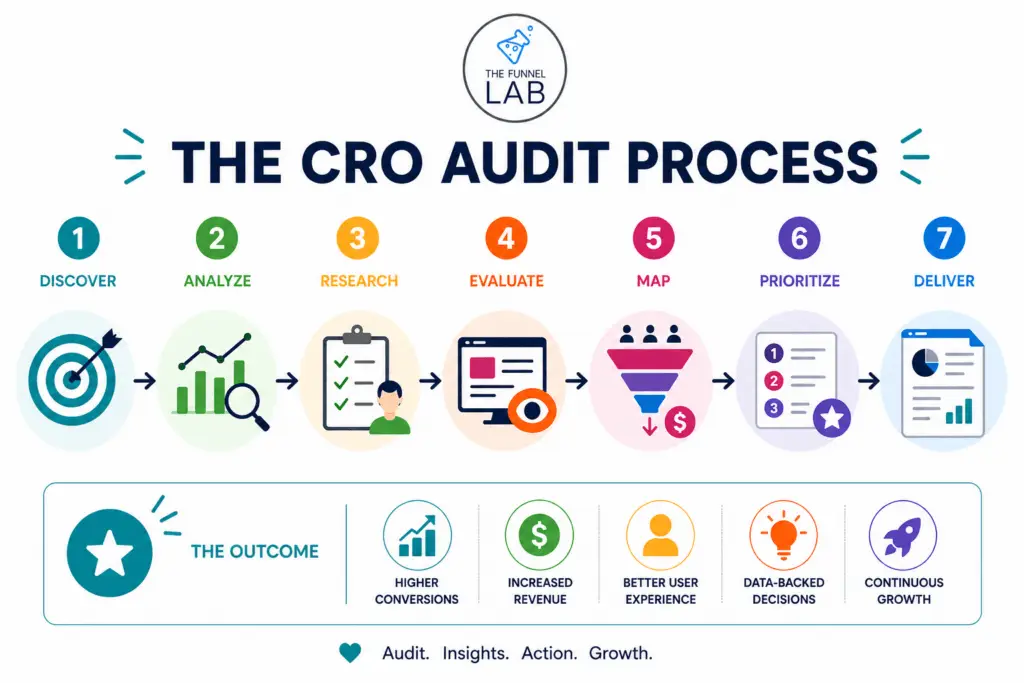
A Conversion Rate Optimization (CRO) audit is a powerful process that uncovers hidden opportunities to boost your website’s performance. It starts by analyzing both hard data and user insights to understand how visitors behave and why they may hesitate. Afterwards, it evaluates your site’s design, technical health, and how you stack up against competitors. SEO analysis adds another layer by revealing which keywords bring valuable traffic and where you can improve. From these findings, targeted hypotheses are crafted and prioritized to maximize impact. Finally, a clear, an actionable report guides your next steps to turn more visitors into customers—making your website work smarter, not harder. Let’s break down each step more so and provide business examples:
- Data Collection and Analysis
The audit begins by collecting from different data sources, ensuring we collect
Quantitative Data: This data provides measurable, numerical insights into user behavior and website performance. It helps identify patterns, trends, and problem areas through statistical analysis.
Qualitative Data: This data gives context and understanding about user motivations, frustrations, and experiences—essential for uncovering the “why” behind the numbers.
Example: A software-as-a-service (SaaS) company might notice that many visitors sign up for a free trial but never upgrade to a paid plan. Data analysis could reveal confusing pricing information or insufficient onboarding content.
2. Heuristic Evaluation
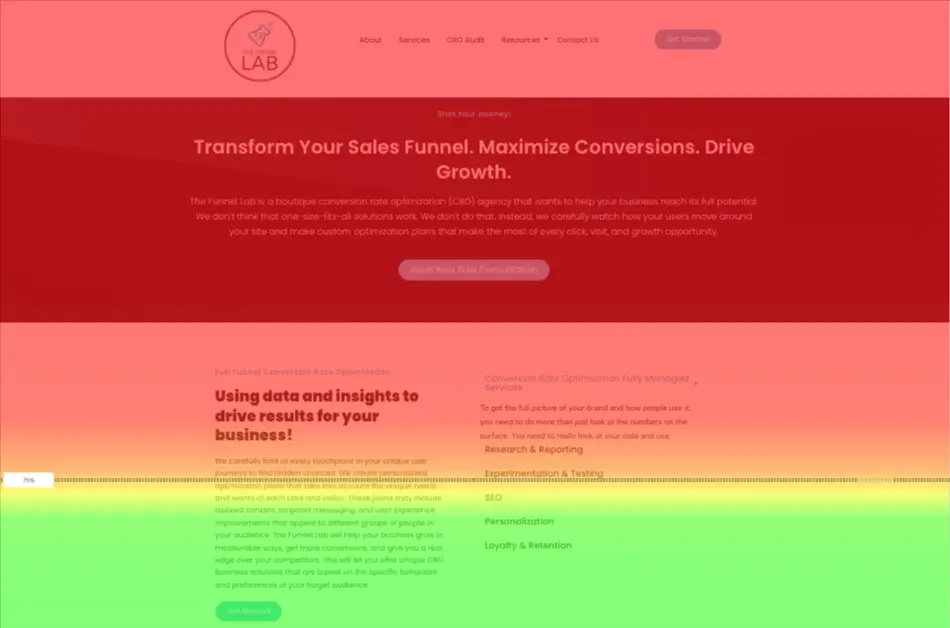
For the heuristic evaluation, we review the website’s usability and design against UX best practices. This includes evaluating navigation simplicity, clarity of calls-to-action (CTAs), content relevance, and visual hierarchy to identify friction points that impair conversions.
3. Technical Assessment
This phase tests site speed, mobile responsiveness, browser compatibility, and overall technical functionality. Technical issues can frustrate users, leading to lost conversions.
Example: A travel booking platform might realize that slow load times on mobile devices cause potential customers to leave before completing their reservations.
4. Competitive Benchmarking
Comparing the website with competitors highlights industry standards and opportunities for differentiation. Businesses learn what features or user experiences competitors offer that they currently lack.
Example: A subscription box company might discover competitors use customer reviews and unboxing videos more effectively to build trust and drive conversions.
5. SEO Ranking
SEO rankings are closely tied to the keywords and search queries driving traffic to your site. By analyzing which keywords rank well and attract visitors, a CRO audit can better understand the intent behind the traffic.
Example: A SaaS company has identified that the keywords that they are currently presenting on page 5 of Google searches with their current keywords and only have a 1% share of voice compared to competitors which is depleting traffic volumes.
6. Hypothesis Development and Prioritization
Based on the collected insights, the audit team creates hypotheses on which changes will most improve conversion rates. These are ranked by potential impact and ease of implementation.
Example: A financial services firm may hypothesize that simplifying their quote request form and adding trust badges will increase lead submissions.
7. Reporting and Recommendations
The audit concludes with a detailed report outlining findings and prioritized recommendations for optimization. This roadmap supports strategic decision-making and resource allocation.
The Funnel Lab's CRO Audit Process
The Funnel Lab Inc. offers a unique CRO audit that provides a holistic view of a business’s current digital footprint. Our audit offers a structured four-week audit review that provides a comprehensive understanding of your website, user behavior, share of voice, and funnel journeys.
This is what our CRO Audit process looks like:
Day 1 to Day 3: Initial Setup and Configuration
- Engage with businesses to understand their current pain points and understand their goals and expectations
- Configure necessary analytic tools to collect relevant data
- Ensure data accuracy and reliability of the collected data
- Integrate social media channels for a holistic analysis
- Examine existing analytics to identify trends and patterns
- Utilize heatmaps and session recordings to observe user behavior in real time
- Assess competitors’ websites to identify industry standards and benchmarks
- Evaluate the sites’ search engine optimization to ensure visibility
Day 11-20: User Feedback and Journey Mapping
- Create and gather user options through online surveys, polls and testimonial reviews
- Identify key audiences and map out different customer journeys to understand varied behaviors
- Revire social media and paid media performance to gauge external influences
Day 20-30: Strategy Development and Review
- Identification of gaps, pain points, and barriers hindering conversions
- Forulate hypotheses for potential improvements
- Developed personalized conversion rate optimization strategy and goals
- Meet & Review
This structured tailored approach ensures a through examination of all factors influencing conversion rates, leading to actionable insights and strategies. Find out more about The Funnel Labs CRO Audit.
Outcomes of a CRO Audit
The ultimate outcome of any CRO audit is a detailed report and strategy outlining specific issues hindering conversions and opportunities for improvement based on best practices and data-driven insights.
As a way to move forward, these opportunities should include possible A/B testing, targeted experiences for different groups, and, in the end, a way to predict how they will affect conversion rates and business goals. This will help you make smart, unbiased decisions that will improve the user experience and get more visitors to do what you want them to do.
How Businesses and E-commerce Benefit from CRO Audits
The ultimate outcome of any CRO audit is a detailed report and strategy outlining specific issues hindering conversions and opportunities for improvement based on best practices and data-driven insights.
As a way to move forward, these opportunities should include possible experimentation, A/B Testing, targeted experiences (personalization) for different groups, and in the end a way to predict how they will affect the overall conversion goal. This will help you make smart, unbiased decisions that will improve the user experience and get more visitors to do what you want them to do.
Ideally with an audit and CRO strategy, businesses should see the following benefits no matter their industry or size:
- Improved User Experience: Fixing usability issues leads to easier navigation and a smoother journey for customers, reducing frustration and increasing engagement.
Business Example: A home goods store revamped their product filters and navigation menus after a CRO audit, resulting in a 25% increase in time spent on site and a 15% lift in purchases.
- Increased Revenue:
Optimizing conversion rates means more sales or leads from the same traffic volume, improving profitability without additional marketing spend.
Business Example: A boutique skincare brand improved their checkout process by reducing form fields and adding guest checkout options, boosting their conversion rate by 30% and increasing monthly revenue significantly.
- Better Customer Insights:
CRO audits provide deep understanding of visitor behavior, preferences, and pain points, allowing businesses to tailor marketing and product offerings effectively.
Business Example: An online education platform used audit insights to personalize course recommendations, leading to higher enrollment rates and improved customer satisfaction.
- Reduced Acquisition Costs:
With higher conversion rates, businesses get more value from existing traffic, reducing the cost per acquisition and increasing return on ad spend.
Business Example: An electronics retailer optimized landing pages based on audit findings, which lowered their cost-per-sale by 20% while maintaining the same ad budget.
- Competitive Advantage:
Continuous CRO auditing enables businesses to stay ahead by adopting evolving best practices and responding swiftly to user expectations.
Business Example: A fashion e-commerce company conducted quarterly CRO audits, allowing them to quickly test new features like augmented reality fitting rooms, keeping them ahead in a competitive market.
Wrapping Up
A conversion rate optimization audit is a vital strategic tool for any business or e-commerce site aiming to maximize their digital performance. Through systematic evaluation of data, usability, technical aspects, and competitive positioning, businesses uncover actionable insights that improve user experience and drive higher conversions. Whether it’s simplifying checkout flows, speeding up page loads, or refining messaging, the benefits are clear: increased revenue, better customer understanding, and a stronger competitive stance in the digital marketplace. Investing in regular CRO audits ensures businesses continuously evolve and thrive in an ever-changing online landscape.
Find out more about CRO Audits.
Have you ever clicked on a website, added something to your cart, and then wondered why you didn’t quite hit “buy,”? You are already engaging with Conversion Rate Optimization, or CRO, possibly without even knowing it. It is essential in today’s saturated markets for businesses to understand what CRO really is, how businesses, from online stores to service providers, can benefit, and the different approaches that make it all work together. Whether you run a Shopify store, manage a SaaS product, or just want to boost your website’s performance, we will delve into the world of Conversion Rate Optimization – what it is, and what it really means for your business.
What Exactly Is Conversion Rate Optimization (CRO)?
At its core, conversion rate optimization (CRO) is like giving your website a gentle, data-driven makeover with one goal: turning casual visitors into customers, subscribers, or whatever action you desire. The “conversion rate (CvR)” itself is simply the percentage of people who take a desired action out of everyone who visits your site.
For example, if 100 people come to your website and only 5 of them sign up for your newsletter, that’s a 5% conversion rate. With CRO, businesses can build a better understanding of their customers and increase that conversion rate (CvR) by, for example, 15% with minimal or no spending.
CRO is the process of improving those numbers, often referred to as metrics. This is done by tweaking elements like design, messaging, buttons, or navigation. It’s not magic; it’s a scientific approach packed with creativity and a whole lot of data driven insights.
Identifying Conversion Rate Metrics
Conversion rate optimization begins by identifying the conversion goals for each specific web page or app screen. The success metrics for your website or mobile app will vary based on your business type, your objectives/goals, and each page. For instance, if you have an e-commerce site, a conversion could be defined as the number of purchases made or the number of visitors who add a product to their shopping cart. If you sell products or services to businesses, you might be measuring the number of leads your website collects or the number of white paper downloads.
Here are some common conversion examples that types of organizations or industries may frequent:
- Media: Pageviews, ad views, newsletter subscriptions, recommended content engagement
- Ecommerce: Product sales, add-to-carts, shopping cart completion rate, e-mail newsletter sign-ups
- Travel: Booking conversions, ancillary purchases, social shares
- B2B: Leads generated, deals closed
Once you have established the conversion metrics for your digital interactions, you can increase conversion rates by improving your digital customer experiences.
Who Can Benefit? Spoiler: Most Businesses
If your business involves a digital touchpoint, whether it be a website, app, or landing page, you should be looking into a CRO process. Here are some closer examples of how CRO can benefit specific industries:
- E-commerce Stores: Imagine a Shopify-based online boutique offering handmade candles. The store is currently only receiving a 4% CvR. With CRO, we can help determine which product descriptions convert better or whether a red “Buy Now” button outperforms a blue one. Since shopping carts are notoriously prone to abandonment, optimizing checkout flow with clearer calls to action or trust badges can make a world of difference.
- SaaS Companies: For software-as-a-service brands, a free trial sign-up or demo request is often the critical conversion. CRO might involve streamlining sign-up forms or placing testimonials on landing pages to boost confidence and clicks.
- Local Businesses & Service Providers: Think about a fitness studio or a legal consultancy. Their website’s conversions might be appointment bookings or contact form submissions. Optimizing site speed, clarifying service benefits, or repositioning phone numbers can turn browsers into booked clients.
Bottom line for CRO is that if you’re measuring success with online actions like sales, leads, or signups, CRO is your new best friend.
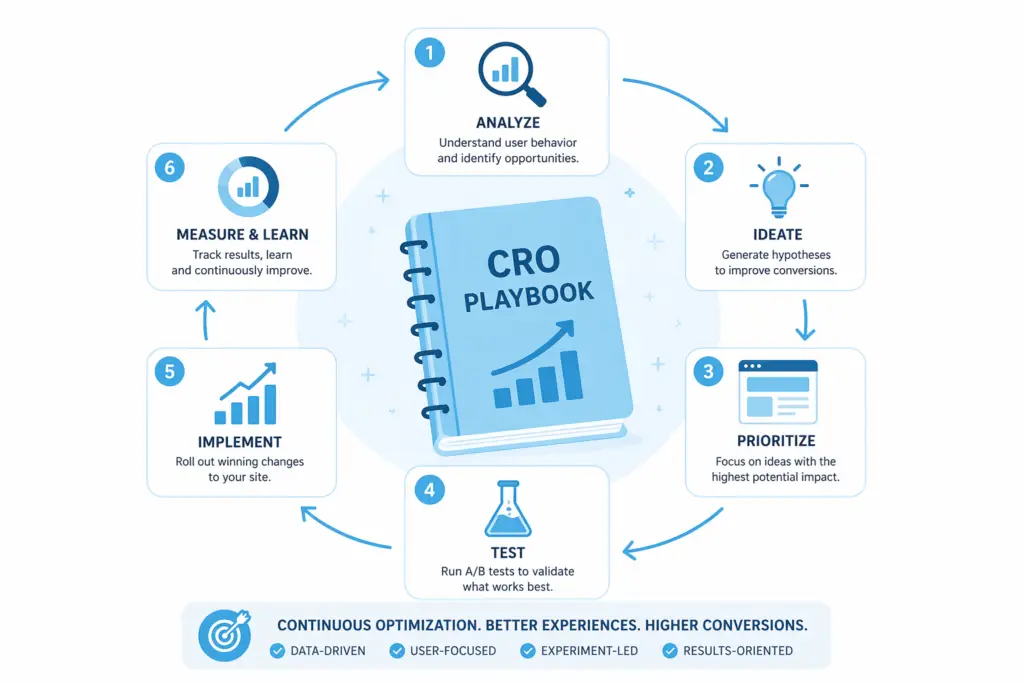
The CRO Playbook: How Does It Work?
Conversion Rate Optimization (CRO) isn’t a one-off fix; it’s a cycle of continuous improvement, commonly referred to as a CRO Flywheel at The Funnel Lab Inc., formulating hypotheses of change with data to steer your experimentation in the right direction.
Here is a breakdown of the CRO Flywheel and how it would work for businesses:
- Research & Data Collection: This is where you put on your detective hat. Using analytics tools, heatmaps, user recordings, testimonials, competitor reviews, and surveys, you gather insights on where visitors get stuck or drop off as well as formulate key customer behaviors in journeys.
Let’s go through an actual scenario for the CRO playbook:
An example of research and data collection could be a Shopify store that sells handmade toys is seeing a large drop-off in completed checkout flows. Through research, we see in session replays that the shipping information is not loading well. Through segmented research and source information, women 25-34 from larger urban areas who are entering the site through Instagram tend to complete checkout more.
Knowing this information, CRO can fix the shipping issue and begin to formulate strategies on how to better target women 25-34 in large urban areas.
2. Hypothesis Formation: Based on what you learn, you create educated guesses. For instance, “Reducing form fields from five to three will increase sign-ups.”
Going back to our women segment that we found in Research & Data, we can take an educated guess that after reviewing testimonials and competitor information from women 25-34, they are more attracted to keywords such as “natural” and “organic,” so we feel that adding phrases that support natural and organic on the website will help boost sales by 25%. We get the lift number through statistics, type of change, and educated guessing. This is our first hypothesis. Usually in CRO Flywheels there will be multiple hypotheses ranging from small to substantial lifts in metric goals.
For more information about The Funnel Labs Research and Hypothesis stage, find out more about our CRO Audits that kick off our CRO playbook.
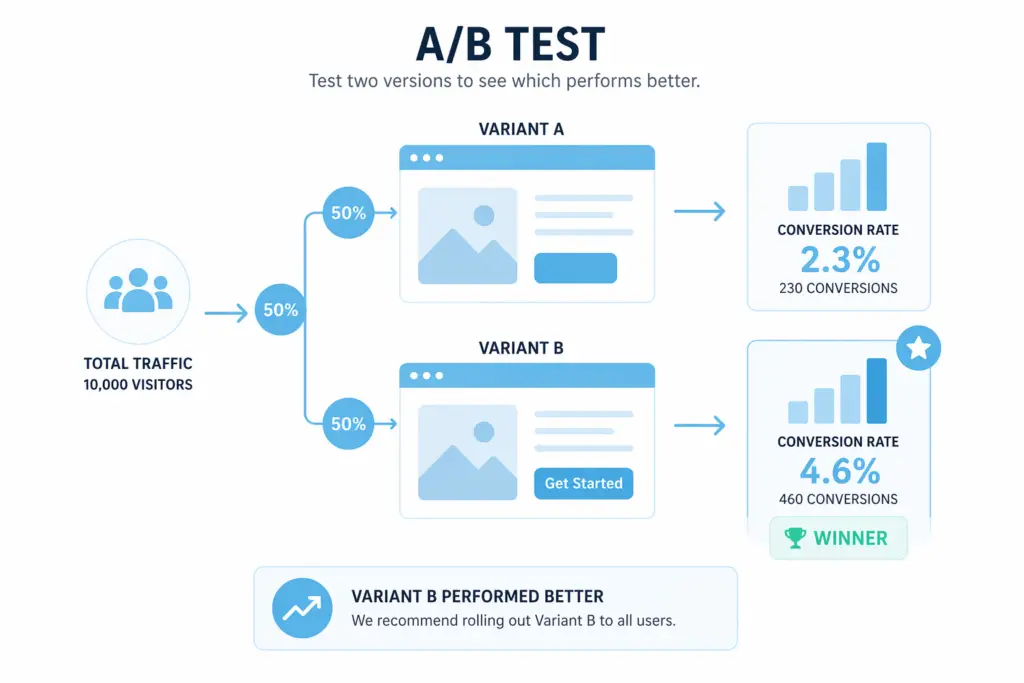
3. Testing: The real fun begins with A/B testing, where you pit your original design against a variant to see which performs better. This could be swapping headlines, changing button colors, content, or even altering entire page layouts.
From our hypothesis example, we build a test on the header of the homepage whose original content features an image of the toy, the toy’s name, and an “Add to Cart” call to action (CTA). The test that we create changes this header by highlighting the best-selling toy from our audience (this information is gathered through research and data collection) and lists key features that include “natural” and “organic” with the “Purchase Now” call to action (CTA).
4. Analysis & Implementation: After running tests long enough to reach statistical confidence, you analyze results and apply winning changes.
For our test that we created for the toy company, after two weeks we have seen that the test is complete and has reached statistical confidence. Behold, we saw a 30% lift in sales with our test and better returning customer sales increasing Life Time Value (LTV). Actual Order Values (AOV) increase as well by 40%.
5. Iterate: CRO is a loop. Once you make improvements, you start the process again, continually refining and adapting to changing user behavior.
To wrap up our example, by reviewing the analysis and furthering our research, we can begin to build multiple hypotheses and test them based on additional findings, research, and continuous testing to further conversion rates (CvR).
Alongside A/B testing, other useful techniques include multivariate testing (testing several elements at once), personalization, landing page builds and user experience research to guide more intuitive changes.
CRO Common Practices
As mentioned above, when it comes to conversion rate optimization (CRO), achieving great results requires deliberate action and ongoing experimentation. To help your business get started, consider these essential CRO best practices that are common:
- Research Your Target Audience and Website Traffic: Understand your visitors’ pain points and behaviors to tailor your optimizations effectively.
- Test Clear Calls-to-Action (CTAs): Avoid rushing visitors. Gauge their readiness to buy and guide them smoothly to the next step.
- Keep Pages Focused: Don’t overload pages with information. Each page should have a clear, singular next step for visitors.
- Optimize for Mobile Devices: Ensure all functionalities and CTAs work seamlessly on mobile to capture the growing mobile audience.
- Reduce Page Load Times: Speed up slow-loading pages to minimize bounce rates and keep visitors engaged.
- Use Trust Signals: Incorporate customer testimonials, case studies, social proof, and industry badges to build credibility.
- Personalize Content and Recommendations: Tailor product suggestions and content based on user behavior to increase relevance and conversions.
- Analyze Engagement with Heatmaps: Identify which areas of your pages attract or lose attention and optimize accordingly.
Why Should Your Business Care?
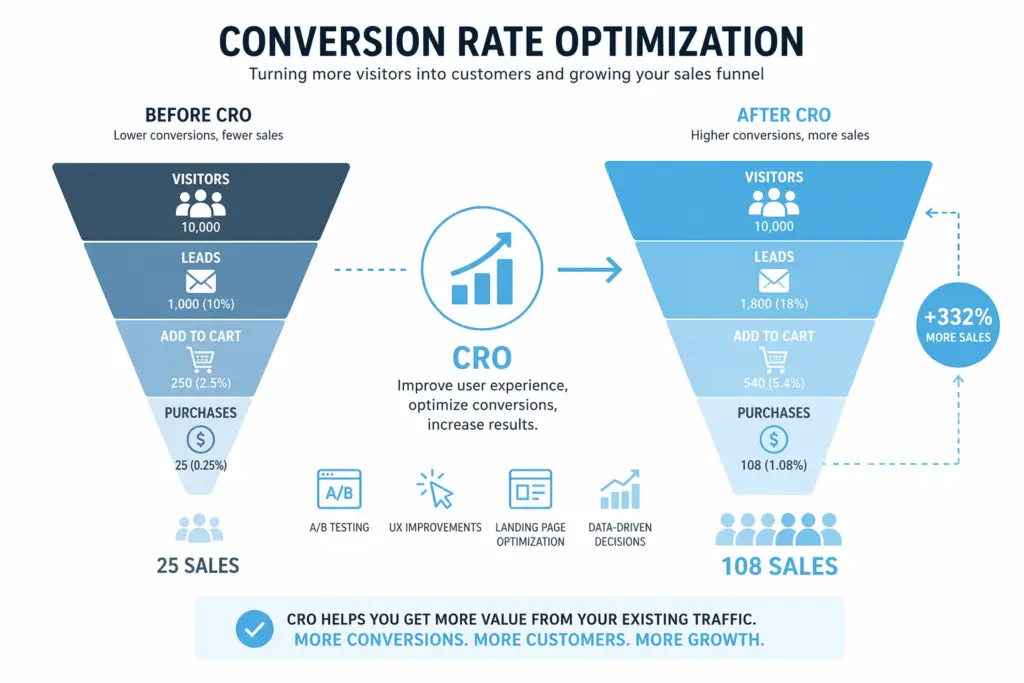
So now that we have gone through the CRO playbook or Flywheel and have given an example of how to go through the process with certain goals, here is a closer look at various outcomes businesses could have when they employ conversion rate optimization as a part of their regular routine:
- Maximized ROI: Instead of spending more to attract traffic, CRO focuses on getting more value from the visitors you already have.
For example, an online clothing retailer can simplify their checkout process with CRO. Instead of spending more on ads, they improved the conversion rate (CvR) by 15% by adding a checkout widget rather than a checkout page, reducing the number of times a buyer has to jump from page to page.
- Better User Experience: CRO naturally leads to clearer, friendlier websites, making your audience feel understood and appreciated.
An industry example is a SaaS company noticing users dropping off during sign-up. By optimizing the form and adding clear instructions, they reduced friction, leading to a 20% increase in trial sign-ups and happier customers.
- Competitive Edge: In saturated markets, a small increase in conversion rates can be the difference between growth and stagnation.
A local gym revamped its website with clearer calls to action and faster loading times. This small change helped them attract more membership sign-ups, outperforming nearby competitors who hadn’t optimized their sites.
- Small Business Growth: CRO is not just for the big players. Small businesses and startups can see outsized gains simply by making their websites more thoughtful and user-friendly.
A handmade jewelry shop improved product descriptions and added customer reviews, boosting conversions by 25%. This growth helped them expand their marketing budget and reach new customers.
When businesses have a CRO strategy, they are able to:
- Increase revenue per visitor
- Lower customer acquisition costs (CPC)
- Get more value from existing visitors/users, or increase their Lifetime Value (LV)
- Acquire more customers and grow your business
Wrapping Up
Conversion rate optimization (CRO) might sound like a technical buzzword, but at its heart, it’s just about understanding people—what makes them click, hesitate, or close the tab. It’s a blend of psychology, design, and data science that doesn’t just boost numbers but builds better online experiences.
If you’ve been curious about testing new ideas on your website or wondering whether your visitors are getting lost somewhere, CRO offers a roadmap to turning data into better experiences and revenue.
Contact our team today to discover how CRO can better assist your business.
Like what you read?
Join our newsletter mailing list today for weekly learnings, case studies and discussions on upcoming market trends.
About Us
The Funnel Lab is a boutique conversion rate optimization (CRO) agency that wants to help your business reach its full potential.
- cro@thefunnellab.com
Recent Post
- All Post
- CRO
- Back
- Data
- Basics