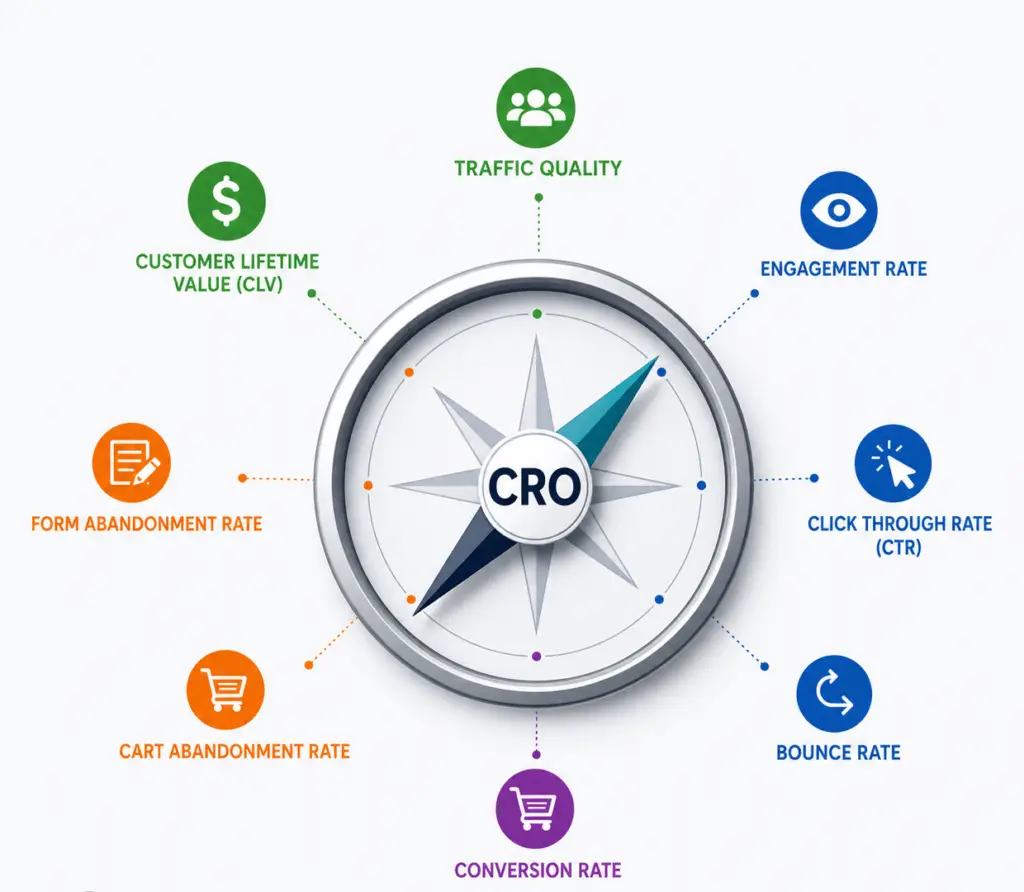
Truly understanding your customers and optimizing their experiences has never been more critical. Whether you operate an e-commerce store on Shopify, run a SaaS platform, or any type of online business, the ability to make smart data-driven decisions is the key to unlocking higher conversion rates and boosting your bottom line. However, not all data is created equal; in fact, focusing on the wrong data and metrics can send your business speeding in the wrong direction. That’s why it’s absolutely necessary to identify the right metrics that truly matter to your business when looking at your conversion rate optimization audit, hypothesizing, and crafting your optimization strategy. By mastering this, you can ensure every decision your business makes is rooted in meaningful insights that drive growth. Let’s dive deeper into data metrics to discover how to harness the power of the right data for successful conversion rate optimization.
What is a CRO Audit and Why do Metrics Used Matter
A CRO audit is a thorough evaluation of your website’s performance in converting visitors into valuable customers. Audits expose how users behave and respond to content, designs, call to actions (CTA) and so much more. Take a closer look at what CRO audits are and how they can help your business; check out our Why CRO Audits Are An Essential Tool For All Business/blog post.
Metrics act as your compass during a CRO audit. Without them, you would be navigating blindly, guessing what works and what doesn’t work. With the right CRO metrics, you gain clarity on what truly drives conversions, where bottlenecks exist, and how users behave on your website.
10 Core CRO Metrics Every Business Should Track
The world of CRO metrics can seem vast and overwhelming. However, focusing on essential, actionable data points helps keep your audit precise and effective. Here’s a breakdown of the key metrics, why they matter, and how they contribute to your conversion goals.
1. Conversion Rate (CvR)
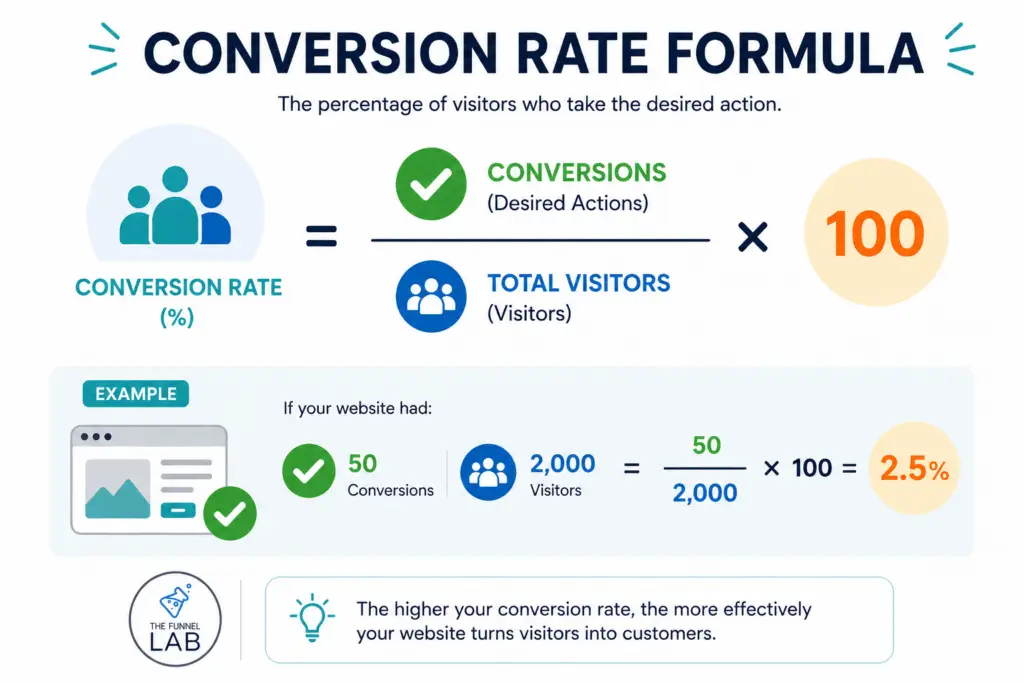
The most fundamental metric, conversion rate, measures the percentage of visitors who complete a desired action—whether that’s making a purchase, signing up for a newsletter, or requesting a demo. It’s the ultimate bottom-line indicator of CRO success.
Why it matters:
Conversion rate tells you directly how well your site or campaign turns interest into action. Low conversion rates highlight opportunities for improvement in user experience, messaging, or targeting.
How to consider it:
Look beyond the overall rate and segment it by traffic source, device, location, or landing page. This granularity reveals which channels or pages perform best, guiding focused optimization efforts.
2. Bounce Rate
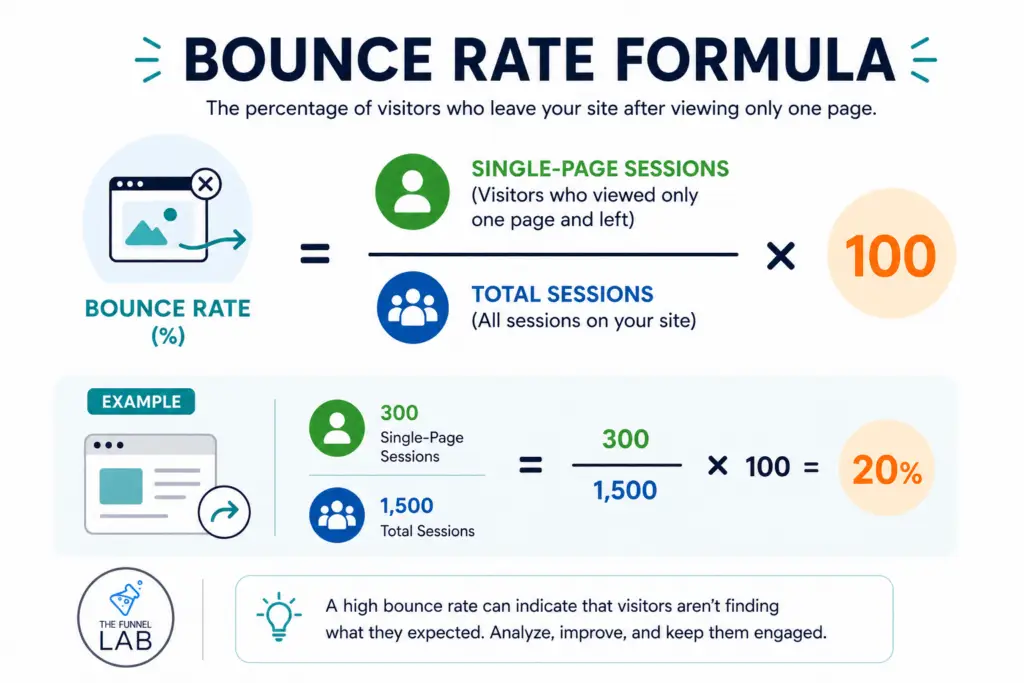
Bounce rate tracks the percentage of visitors who leave your site after viewing only one page. A high bounce rate often signals that your landing page isn’t engaging visitors or meeting their expectations.
Why it matters:
If visitors leave immediately, it’s a missed opportunity. Bounce rate helps identify pages that need better content, clearer calls to action, faster loading times, or improved relevance.
How to consider it:
Analyze bounce rates alongside conversion rates and traffic sources. For example, high bounce rates from paid ads may indicate mismatched messaging or targeting issues.
3. Average Session Duration and Page Per Session
These two metrics reflect user engagement. Average session duration measures how long visitors stay on your site, while pages per session count how many pages they explore.
Why they matter:
Longer sessions and more pages suggest users find your content valuable and are more likely to convert. Short, shallow visits typically forecast lower conversions.
How to consider them:
Use these metrics to assess content quality, site navigation, and overall user experience. If visitors quickly leave or view only a page or two, it’s a cue to make your site easier to explore and more engaging.
4. Cart Abandoment Rate
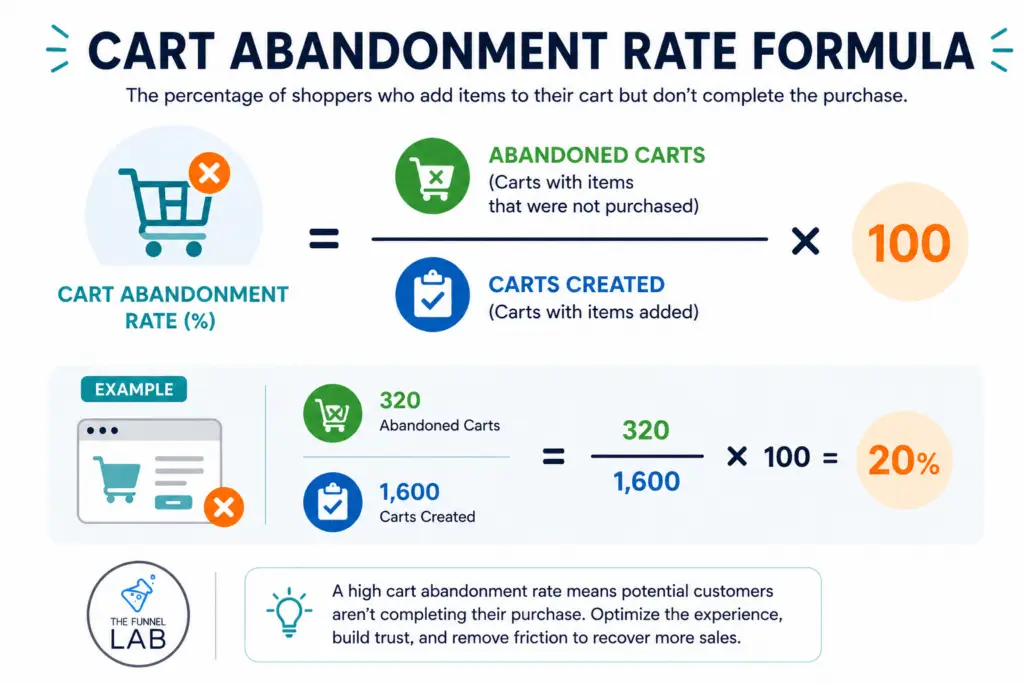
This metric tracks the percentage of shoppers who add products to their cart but leave without completing the purchase.
Why it matters:
Cart abandonment reveals friction points in your checkout process—whether it’s unexpected costs, complicated forms, or lack of trust signals.
How to consider it:
Test checkout flow improvements, add cart reminders or exit-intent offers, and analyze abandonment by device or source to tailor solutions effectively.
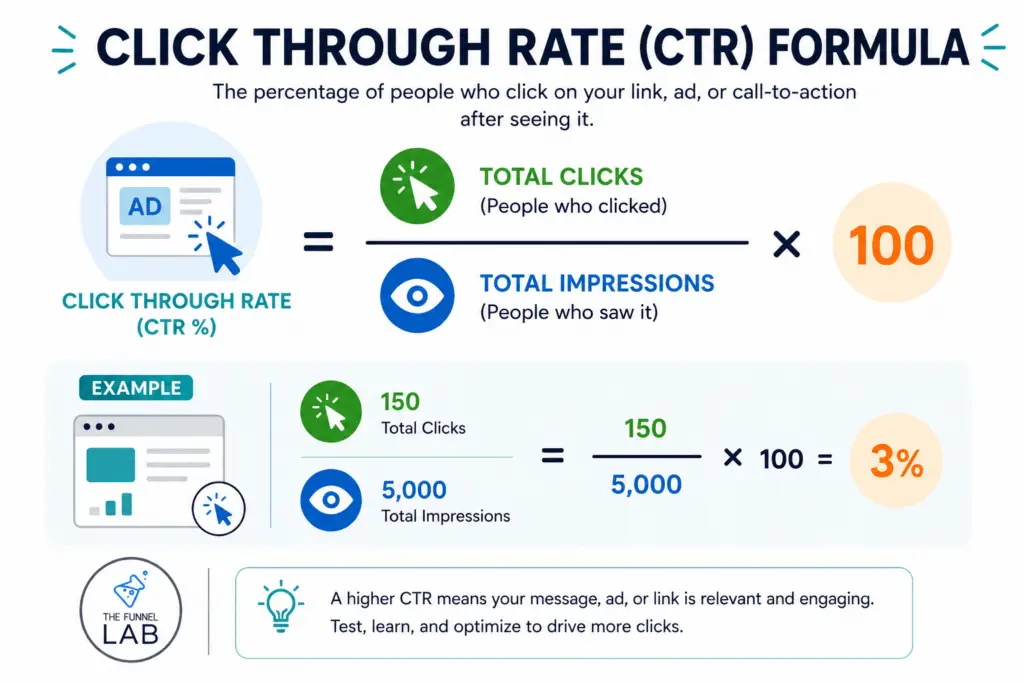
5. Click-Through Rate (CTR)
CTR measures the percentage of users who click on a specific link or call-to-action compared to the total users who saw it.
Why it matters:
CTR indicates how compelling and relevant your messaging is, whether in emails, ads, or on-site buttons. Low CTRs mean your value proposition or call-to-action needs refinement.
How to consider it:
Test different copy, design, and placement to boost CTR, and segment by audience demographics to tailor your approach.
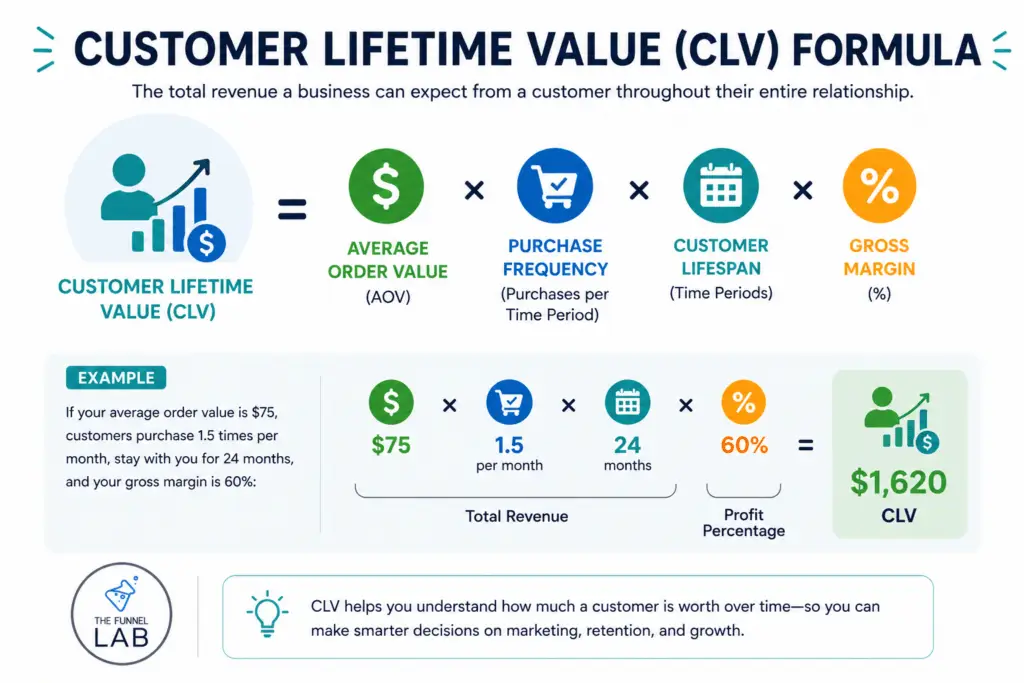
6. Customer Lifetime Value (CLV)
CLV estimates the total revenue a customer will generate over their relationship with your business.
Why it matters:
Understanding CLV helps prioritize CRO efforts toward retaining high-value customers and optimizing for long-term profitability, not just one-time conversions.
How to consider it:
Combine CLV with acquisition costs to ensure your marketing and CRO strategies attract and keep the right customers profitably.
7. Exit Rate
Exit rate shows the percentage of users who leave your site from a specific page.
Why it matters:
High exit rates on key pages might indicate issues with content, UX, or confusing navigation that deter users from progressing further.
How to consider it:
Use exit rate alongside funnel analysis to identify and fix drop-off points in the conversion journey.
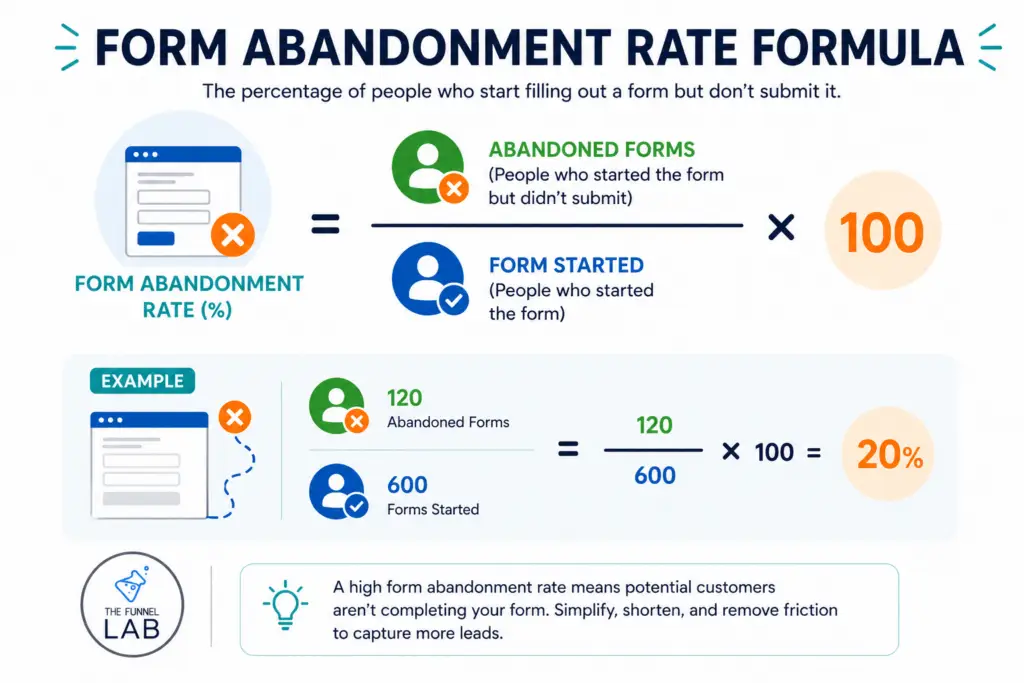
8. Form Abandonment Rate
For sites relying on lead generation through forms, this metric measures how many users start but don’t complete the form.
Why it matters:
High abandonment suggests the form is too long, unclear, or intrusive, costing you valuable leads.
How to consider it:
Simplify forms, add progress indicators, and test different field requirements to optimize completion rates.
9. Average Order Value (AOV)
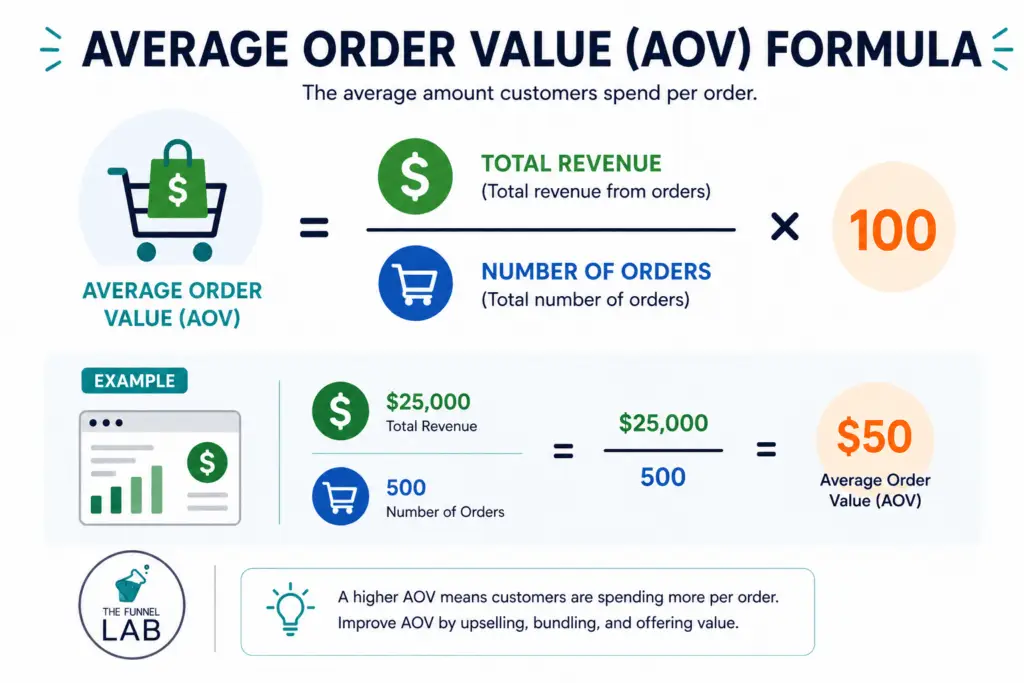
AOV (Average Order Value) is the average amount a customer spends per purchase. Increasing AOV boosts revenue without needing more customers, using tactics like upselling, product bundling, or free shipping thresholds. It is calculated by dividing total revenue by the number of orders placed.
Why it matters:
A higher AOV means more revenue from each customer transaction, improving overall profitability and marketing efficiency. It helps maximize the value of existing traffic and reduces the cost per sale.
How to consider it:
Analyze AOV by customer segments, product categories, and sales channels to identify opportunities for targeted upselling or bundling. Test different offers and incentives to encourage customers to spend more per order.
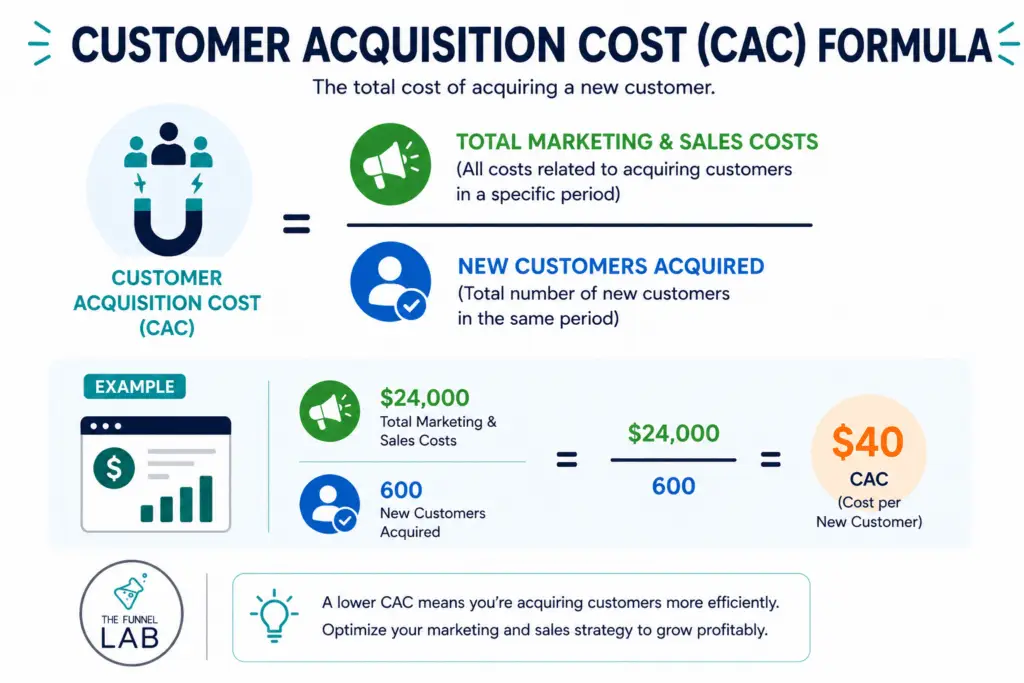
10. Customer Acquistion Cost (CAC)
Customer Acquisition Cost (CAC) is the average expense of gaining a new customer, including all marketing and sales costs. A low CAC indicates efficient customer conversion, while a high CAC suggests the need to improve marketing strategies for better ROI. It is calculated by dividing the total marketing and sales expenses by the number of new customers acquired.
Why it matters:
CAC helps businesses understand the cost-effectiveness of their marketing and sales efforts. Keeping CAC low ensures sustainable growth and better profitability by acquiring customers without overspending.
How to consider it:
Evaluate CAC alongside customer lifetime value (CLV) to ensure acquisition costs are justified by long-term revenue. Segment CAC by channels and campaigns to identify the most efficient sources of new customers and optimize budget allocation accordingly.
How to Use These Metrics
When conducting a CRO audit, these metrics serve as key data points that illuminate the health and potential of your conversion funnel. Here’s a structured approach to leveraging them:
1.Establish Benchmarks:
Start by gathering current data on all relevant metrics to understand your baseline performance.
2. Segment Your Data:
Break down metrics by traffic source, device, demographics, and user behavior to uncover hidden patterns.
3. Identify Bottlenecks and Drop-Off Points:
Use bounce rates, exit rates, and abandonment metrics to pinpoint where users lose interest or face obstacles.
4. Analyze User Behavior:
Complement quantitative metrics with qualitative data like session recordings, heatmaps, or user feedback to grasp the “why” behind the numbers.
5. Prioritize Testing Opportunities:
Focus on pages or steps with the highest impact potential and lowest performance to maximize returns on optimization efforts.
6. Track Improvements Over Time:
Continuously monitor these metrics after implementing changes to validate what works and iterate accordingly.
Why Reviewing These Metrics Are Beneficial for Businesses
Understanding and acting on CRO metrics is far more than just crunching numbers—it’s about empowering your business to make smarter decisions that fuel meaningful growth. When you embrace these metrics, you unlock insights that transform how you connect with your customers and optimize your digital presence. Here’s why paying close attention to CRO metrics is a game-changer for any business:
Increased Revenue Without More Traffic:
Imagine you run an online clothing store that gets steady traffic but struggles with sales. By optimizing your conversion rate—perhaps by simplifying the checkout process or highlighting best-sellers—you can boost revenue significantly without spending extra on ads. This means you’re extracting more value from the visitors you already have, reducing the pressure and cost of constantly acquiring new traffic.
Example, a mid-sized retailer increased their conversion rate by 20% simply by adding product videos and clearer sizing guides, resulting in a substantial revenue uplift without any additional marketing spend.
Improved User Experience:
Metrics like session duration and bounce rate offer a window into how visitors experience your site. If visitors leave quickly or don’t explore beyond the landing page, it’s a signal that something isn’t quite right—maybe the navigation is confusing, or the content doesn’t resonate. By addressing these issues, you make browsing and buying smoother and more enjoyable.
Example, Consider a SaaS company whose bounce rate dropped by 30% after revamping their homepage with clearer value propositions and easier access to product demos, making it simpler for prospects to engage and convert.
Better Marketing ROI:
Your marketing budget is precious, and CRO metrics help ensure every dollar is well spent. Click-through rates (CTR) show how compelling your ads and calls to action are, while customer lifetime value (CLV) reveals which customers bring the most long-term value.
Example, a subscription box service used these metrics to identify their most profitable customer segment and tailored campaigns to attract similar profiles, resulting in higher retention and more efficient use of their marketing dollars.
Data-Driven Decisions:
Gone are the days of relying on gut feelings or assumptions. With CRO metrics, you have concrete data guiding your steps. This reduces costly mistakes and wasted efforts.
Example, an e-commerce site used heatmaps and conversion data to discover that a “Buy Now” button was overlooked because it was placed too low on the page. Moving it higher led to a measurable increase in conversions. Making changes backed by data means you continually refine your site in ways that truly resonate with your audience.
Competitive Advantage:
In today’s fast-moving markets, staying still means falling behind. Businesses that regularly audit and optimize their conversion performance based on solid metrics can respond quickly to changing customer behaviors and market trends. Example, a travel booking platform that monitored exit rates and booking abandonment closely; by swiftly addressing friction points in the booking process, they stayed ahead of competitors and captured more bookings during peak seasons.
In summary, CRO metrics are not just numbers—they are powerful tools that help you understand your customers, improve your website, and grow your business more efficiently. By focusing on these insights, you position your company to thrive, adapt, and outperform competitors in an increasingly digital world. Whether you’re a small startup or a large enterprise, embracing CRO metrics can be the key to unlocking your full revenue potential and creating lasting customer relationships.
Final Thoughts: Make Metrics Your CRO Compass
Conversion Rate Optimization isn’t just about tweaking buttons or redesigning pages—it’s about understanding your audience deeply and delivering value at every step of their journey. Metrics give you the roadmap to do exactly that. By regularly tracking and analyzing key CRO indicators like conversion rate, bounce rate, CTR, and others, you empower your business to grow smarter, faster, and more sustainably.
As you plan your next CRO audit, remember: it’s not about collecting data for data’s sake. It’s about finding the right signals that point to real opportunities. Use these metrics to uncover insights, prioritize action, and test boldly. The payoff? A website that converts better, customers who are happier, and a business that thrives.
Keep exploring, optimizing, and growing—your next breakthrough is just a metric away.